
Latest News & Articles
From Poison Ivy to Cancer: The Expanding Market for ADBP
One Mechanism, Many Targets
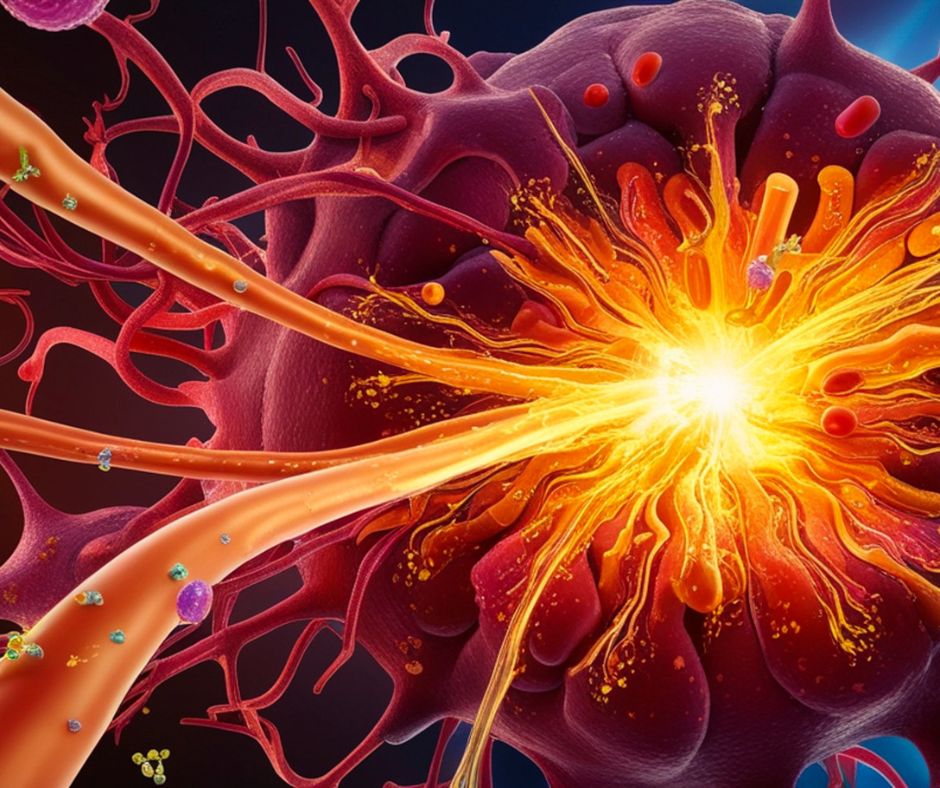
This series, starting with “The Role of Investors in Advancing ADBP Technology” and its funding roadmap, returns to one mechanism throughout. ADBP delivers antigen particles in a size range that the immune system’s own antigen-presenting cells take up especially efficiently, producing a stronger immune signal than earlier delivery methods achieved. That mechanism carries ADBP’s story well past poison ivy.
BOME’s scientific proposal describes design work extending the same approach toward infectious-disease and cancer antigens. This forms the foundation of why ADBP stands out as the next big investment opportunity for anyone thinking beyond a single product.
The Infectious Disease Horizon
BOME’s own research points to tuberculosis and malaria as the priority global-health targets for a next-generation delivery platform like ADBP. The global health community treats this pair as top priority today. The company’s proposal also outlines early design work exploring whether the same particle-delivery boost could strengthen a malaria or COVID-19 vaccine candidate. This work sits at the design stage, grounded in the same mechanism that already succeeded for poison ivy. Find the full detail in our infectious disease spoke article.
The Cancer Immunotherapy Frontier
Cancer immunotherapy works, in part, by teaching the immune system to recognize antigens unique to tumor cells. BOME’s proposal identifies this as a promising future application of the same delivery mechanism. The specific technical work here is real: peptide-based cancer antigens need different solubility properties than urushiol to work with ADBP.
That’s why BOME filed a patent application for modified versions of these antigens, moving methodically toward a finished product. This stage sits earlier than the poison ivy work, and the cancer immunotherapy spoke article covers the full picture.
Other allergic diseases: the ratio of poison ivy naturally has the solubility properties needed for antigen delivery by precipitation (ADBP). These are solubility a physiologically acceptable solvent that mixes freely with water (in this case ethanol) combined with being insoluble in water. We have pending patent applications to confer these properties on other classes of antigens, for which we believe the largest markets are in infectious diseases and the immunotherapy of cancer. Once these technologies have been implemented in vaccines for infectious diseases and cancers, they can be cross adapted to make ADBP vaccines for other allergies, as well.
How to Get Involved
Each future application will move through its own preclinical work, its own clinical trials, and its own FDA approval, building on poison ivy’s foundation rather than assuming an automatic result. This breadth provides real optionality: a platform with one validated win and several scientifically promising, patent-protected directions to grow into. That’s the honest version of ADBP and market growth prospects for long-term investors.
To see the full investment thesis this builds toward, return to “Why ADBP is Part of the Future of Biopharmaceutical Innovation.” Reach the team directly at info@BOMEpharma.com to discuss where the current funding round fits into this bigger picture.